
Classic Words With Friends
ZyngaWord
4.2555.23K Reviews
- Version
- 57.01.01
- Installs
- 50.00M
- Age Rating
- Everyone
Screenshots
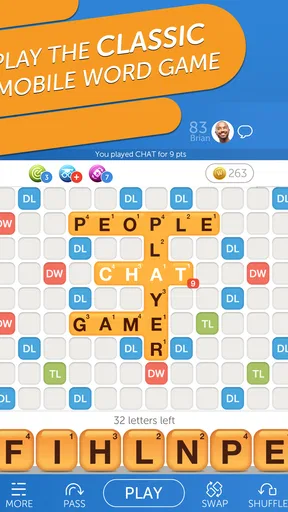

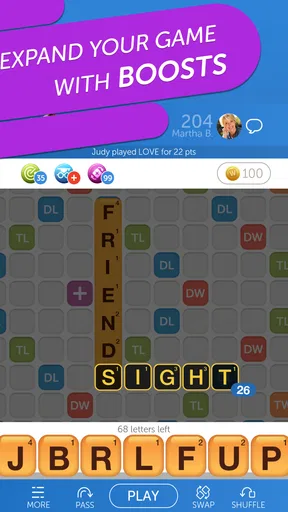
Our Review of Classic Words With Friends
 Analysis by Appyee
Classic Words With Friends is at its best when you treat it as a slow, social word duel rather than a quick test with a right answer. I like that a move can be both a vocabulary choice and a small tactical decision: a familiar word may be safe, while a less obvious one can use awkward letters or take advantage of the board. That mix gives the game more staying power than a simple word-search puzzle, though it also means a match can move at a patient pace.
A board game that rewards looking ahead
The appeal is not just finding a word you know. Before placing tiles, I try to check what spaces the move opens for my opponent, whether I can save a useful letter combination, and whether a modest play is wiser than chasing a high score. That habit is especially useful when the rack feels poor: instead of forcing a long word, I look for a compact placement that leaves the board less inviting. The game suits people who enjoy weighing options, not only showing off a big vocabulary.
It also makes a good fit for everyday gaps. I can take a turn while waiting for an appointment, then return later when the other player has responded. A match does not demand a long uninterrupted session, which is one reason I find it easier to keep up with than a timed word challenge. If you prefer a game that keeps both players moving at once, though, this turn-by-turn rhythm may feel slow rather than relaxing.
What the social format changes
Playing with someone you know gives each move a little extra meaning: you can enjoy the rivalry without needing to arrange a full evening around it. Random opponents are a different kind of option when friends are unavailable, but the experience depends on finding players whose pace matches yours. I would not choose a casual asynchronous word game if I wanted lively conversation or an immediate back-and-forth; its strongest social quality is the ongoing match, not a guarantee of chat or companionship.
A practical approach is to agree with a friend on a comfortable pace before starting, especially if one of you tends to leave turns for later. It prevents a quiet match from feeling like a personal snub when everyday schedules get in the way. For a family member or friend who enjoys language but lives far away, that low-pressure routine can be more appealing than a competitive game that requires everyone to be online together.
Where it sits among word games
Compared with a solo crossword or a word-search app, this is less about completing a self-contained puzzle and more about adapting to another person’s choices. A crossword is usually better when I want a clear solo task and a satisfying finish in one sitting. A timed word game is a better pick when I want quick energy and rapid rounds. Here, the pleasure comes from watching a shared board develop and deciding how much risk to take on each turn.
That distinction matters if you are choosing a game for a short break. A single move can be brief, but a whole match may stretch across many breaks, so it is not ideal if you need a neat endpoint right away. I also find that players who dislike checking spellings or debating unfamiliar words may be happier with a more visual, less vocabulary-dependent puzzle. This game puts language knowledge at the center, and the competitive setting can make uncertain words feel more consequential.
Small habits that make matches better
One useful habit is to think about the next turn before committing to the current one. If a placement uses every tempting letter but leaves no flexible options, a smaller move can sometimes make the following rack easier to handle. I also try not to judge a play only by its immediate points: a move that avoids opening a valuable part of the board can be worthwhile even when the score looks ordinary. Those choices are subtle, but they are what keep repeated matches from becoming a routine of simply playing the longest word available.
Another trade-off is how much help you want from in-game aids. Hints or tile swaps can reduce the frustration of a difficult rack, but leaning on assistance too often may take away the satisfaction of working through it yourself. I would save those tools for a genuinely stuck moment rather than treating them as the default. Players who enjoy solving every position unaided can keep the focus on their own word knowledge; those who want a gentler experience may appreciate having another option when the board stalls.
If you want a dependable solo puzzle with a clean finish, I would look elsewhere; if you enjoy a shared board and a match that can unfold around ordinary routines, this format makes more sense. That is the main choice to make before downloading: do you want to beat a puzzle, or do you want to keep a word-game conversation going over several turns?
Getting Started with Classic Words With Friends
Installing Classic Words With Friends was a breeze. Available for both Android and iOS, it’s just a quick download from your app store. Once you're in, the app greets you with a familiar interface that feels like a warm hug from an old friend. The layout is simple, intuitive, and gets you into the game without any fuss.
Gameplay and Features
The core of the game is straightforward: form words from a set of given letters and earn points based on the complexity of the word and the tiles you use. But don't be fooled by its simplicity. The deeper you get into the game, the more strategic it becomes. Planning out your moves and anticipating your opponent's next word is where the true challenge lies.
What I love about this app is the social aspect. You can connect with friends or play with random opponents from around the globe. It's like having a mini tournament in your pocket, ready to whip out whenever you have a few minutes to spare. And trust me, those minutes can quickly turn into hours.
Visuals and Sound
The visuals in Classic Words With Friends are nothing to write home about, but they serve their purpose. The design is clean, with a focus on functionality over flair, which is precisely what you need when you're deep in thought, trying to remember if "qi" is a valid word.
The sound effects are minimal, which is a relief. A gentle click when placing tiles and a soft chime when scoring make for a pleasant experience without being intrusive. If you're in a public space or just want some peace, the game is perfectly playable on mute too.
Challenges and Rewards
To keep things interesting, the app offers daily challenges and rewards. Completing these can earn you coins and power-ups, adding an extra layer of engagement. The power-ups can be a lifesaver when you're stuck, offering hints or even swapping out tiles.
However, like many free-to-play games, there's always that little nudge towards in-app purchases. While you can enjoy the game without spending a dime, the temptation to buy coins or power-ups is ever-present. But hey, that’s just the world of mobile gaming.
Community and Support
The community around Classic Words With Friends is vibrant. There are forums and social media groups where players share strategies, tips, and even words that have helped them score big. It’s these interactions that keep the game alive and kicking.
If you ever hit a snag, the support team is pretty responsive. They’ve got a decent help section within the app, but reaching out directly can get you answers fast. It’s nice to see an app that cares about its users.
Who I’d recommend it to
This is a word game from Zynga, and its long-running appeal is reflected in an average rating of 4.0 from around 1.7 million ratings, with more than 50 million installs. Those figures suggest a familiar, established game, but they do not mean every player will enjoy its pace. I’d recommend it most to people who like language-based competition, can accept a match that develops gradually, and enjoy having an opponent shape the puzzle.
It is free to start and rated for Everyone, so it can be an approachable choice for a household looking for a shared word game. I would still make purchases a deliberate choice: optional in-app items range from $0.99 to $149.99, so it is sensible to check the purchase options and device settings before handing the game to a child. You can enjoy the basic appeal without turning every difficult rack into a reason to spend.
The current version is 49.01.02, and the game dates back to February 14, 2011. It runs on Android 6.0 or later. For someone using an older device or introducing the game to a less confident player, the useful question is not just whether it installs, but whether they will enjoy its word-first challenge and slower social rhythm. If they mainly want quick visual entertainment, a different kind of casual game will probably be a better fit.
Final verdict
In conclusion, Classic Words With Friends is a gem for anyone who loves word games. It's the perfect blend of challenge and social interaction, wrapped up in a neat little package. Whether you're playing against friends or strangers, the thrill of finding the perfect word never gets old. So, if you haven’t already, give it a whirl—you might just find yourself hooked!
Verdict
Strengths of Classic Words With Friends
- Engaging multiplayer feature.
- Large word database.
- Helpful word suggestions.
- Offline play available.
- Customizable game settings.
Limitations of Classic Words With Friends
- Ads can be intrusive.
- Requires constant updates.
- Occasional lag in gameplay.
- Limited chat features.
- In-app purchases for extras.
Other Releases by Zynga
View All


Similar Picks in This Category
View All
Word Search - Word Puzzle Game
Bluetile4.8

Word Search Quest - Puzzles
Blackout Lab4.8

CodyCross: Crossword Puzzles
Fanatee, Inc.4.7

Words of Wonders: Crossword
Fugo Games4.9

Wordscapes: Word puzzle game
PeopleFun4.7

Word Search Explorer
PlaySimple Games4.9
You May Also Like
View All

Frequently Asked Questions
What is Classic Words With Friends?
Classic Words With Friends is a popular word puzzle game that allows players to challenge their vocabulary skills by forming words on a virtual board. It’s a fun and competitive way to engage with friends and other players worldwide. The game is available on both Android and iOS platforms.
How do I play Classic Words With Friends?
Players take turns placing letter tiles on a board to form words, similar to Scrabble. Each letter has a different point value, and strategic placement can earn bonus points. The goal is to accumulate the highest score by creating high-value words and using special board spaces.
Is Classic Words With Friends free to download and play?
Yes, Classic Words With Friends is free to download. However, the game offers in-app purchases that provide additional features, such as ad removal, power-ups, and more. While these are optional, they can enhance the gaming experience for players who want extra perks.
Can I play Classic Words With Friends offline?
Classic Words With Friends primarily requires an internet connection to play against other users. However, there are modes available where players can practice against AI opponents without an internet connection, which is perfect for improving skills or playing in areas with limited connectivity.
Are there any educational benefits to playing Classic Words With Friends?
Yes, playing Classic Words With Friends can be educational. It helps improve vocabulary, spelling, and strategic thinking. The game encourages players to think critically about word placement and resource management, making it a fun yet educational tool for all ages.
Play our best games!


